Custom software company · Timișoara

We build software that lets companies skip a generation.

Our senior engineers move into your company and, in eight to twelve weeks, build the software you would otherwise wait five to ten years for. On site, at a fixed price — and the code is yours.

On site · Fixed scope, fixed price · 8–12 weeks · You keep the source

Scroll to switch the lights on
1857

Gas lighting arrives. Two hundred lamps go up along Timișoara’s streets.

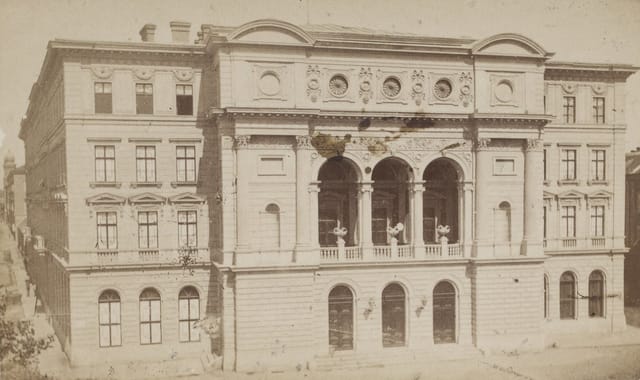
The Franz Josef Theater in Timișoara, photographed around 1880, four years before the city switched on all 731 of its street lamps.
The Franz Josef Theater, photographed around 1880 — four years before the switch.
1882

The Viennese gas company demands steeper terms. The city council says no — and instead of renewing the contract, skips a whole technology: it signs for electric light.

12 November 1884

A steam plant pushes current through 59 kilometres of new cable. 731 lamps come on across every street at once.

“A whitish-yellow light instantly flooded the streets of the city on the Bega, and coloured the elegantly decorated buildings.”Luminătorul, November 1884

The first city in continental Europe lit entirely by electricity. Vienna and Budapest, many times richer, kept their gas — Budapest switched a quarter of a century later. Having less to lose turned out to be the advantage.

731
lamps switched on together
59 km
of cable laid in under two years
10 km²
the whole city, lit at once
+25
years ahead of Budapest

Lumeni 884 is named after that evening: lumen, the measure of light, and the year it happened. We build the same jump — in software.

Skip the story

IIThe argument

Behind is a good place to jump from

Timișoara could skip gas because it had so little invested in it. A company on paper, spreadsheets and a fifteen-year-old ERP is in the same spot: little worth protecting, no migration to fund — and AI has made custom software far cheaper to build.

Kenya skipped the landline and went straight to M-Pesa, on basic handsets. In Senegal, Wave built mobile money in Wolof and French. Neither modernised the old system. They went around it.

The ladder5–10 years

The usual way: digitise, buy an ERP, integrate it, then maybe analytics. One rung at a time.

The leap8–12 weeks

The leap: skip the rungs and build the current generation directly — in production, on site.

Paper and spreadsheets 01Digitise 02Buy an ERP 03Integrate it 04Analytics The current generation 5–10 years 8–12 weeks

Two honest caveats. The leap skips the ladder, not the work: your data still has to be reachable, processes still change, and people still have to adopt what we build. And it cannot be done at arm’s length — most AI pilots stall at deployment, not in the model. That is why we don’t run pilots from our office. We come to yours.

For the first time, being behind on technology is an advantage — if you skip on purpose.

IIIThe work

Companies that skipped a generation

A few of the companies we have built software for.

01Breeders’ association · Romania

ACLC

Asociația Crescătorilor de Limousine și Charolaise

The Romanian association of Limousine and Charolaise cattle breeders — now running on software we built.

3×faster day-to-day operations
Autonomousruns without outside help
Illustration — not the client’s interface

02Gaming club · Trading card games

Flamey’s Gaming Bastion

A trading-card-game club, digitalized — with a members’ app that installs on the phone.

  • Membership card, scanned at the door
  • Embers: points for coming, rewards to spend
  • The shop, at member prices
  • Lobby TV: queue a song, see what is on tonight
members.flamey.roopens in a new tab
Illustration — not the client’s interface

03Energy · Romania

Hora Energy

An energy management system (EMS) for Romanian energy communities: households and companies on the same grid use their solar energy together.

  • Community console
  • Member app
  • Battery and surplus management
  • Bills from distribution-operator data
hora-energy.comopens in a new tab
Illustration — not the client’s interface

IVHow we work

We send engineers, not slide decks

Our engineers work inside your company — at your site, on your systems, next to your people — and are judged on one thing: software running in production and being used. Every project ends with your team holding the source code, the runbook and a trained owner. Leaving is part of the plan.

  1. 01

    Leapfrog Assessment

    One to two weeks on site. We map how work really flows — the paper, the spreadsheets, the workarounds — and find which stages of modernisation you can skip. You get a build order with the cost and risk of each system. Not a strategy deck.

  2. 02

    Embedded Build Residency

    One or two senior engineers at your site for eight to twelve weeks, shipping one complete production system end to end. Fixed scope, fixed price. You keep the running system, its source code, a runbook, and a person on your team trained to own it.

  3. 03

    AI-Native System Build

    One workflow, replaced outright: document and invoice extraction, approval routing, plain-language reports over your operational data, customer intake in five languages. It plugs into what you already run — never a big-bang migration.

  4. 04

    Pilot-to-Production Rescue

    You have a stalled AI pilot or a vendor proof-of-concept. We make it real: data plumbing, evaluation, workflow integration, access control — and adoption by the people who actually do the job.

Terms of engagement

On site
At your site, on your systems, next to your people.
1–2 weeks
Leapfrog Assessment: a build order with cost and risk per system.
8–12 weeks
Embedded Build Residency: one complete production system, end to end.
Fixed scope, fixed price
Agreed before we start. No big-bang migration.
You keep it all
The running system, its source code, a runbook, and a trained owner.

The method

How the lights go on

  1. 01

    Survey

    The first week is spent doing the job beside your staff. The workflow in people’s heads is never the workflow in the manual — we build from the real one.

  2. 02

    Wire

    We build in place, on your systems and your data. The first working software reaches production in weeks, integrated with what you already have.

  3. 03

    Illuminate

    The system goes live with the people who will use it. Adoption is part of the engagement, not an afterthought — we are measured on usage, not on delivery.

  4. 04

    Hand over the switch

    Before we leave, someone on your team can run, fix and extend the system. You keep the source code, the runbook, and the owner. Then we leave.

Next step

Book the assessment

Based in Timișoara, working across Europe and West Africa. Tell us what your company runs on today — paper, Excel, an ageing ERP, or all three. We will tell you honestly whether a leap is possible, and what it would cost.

We answer in Romanian, German, English, French and Wolof.

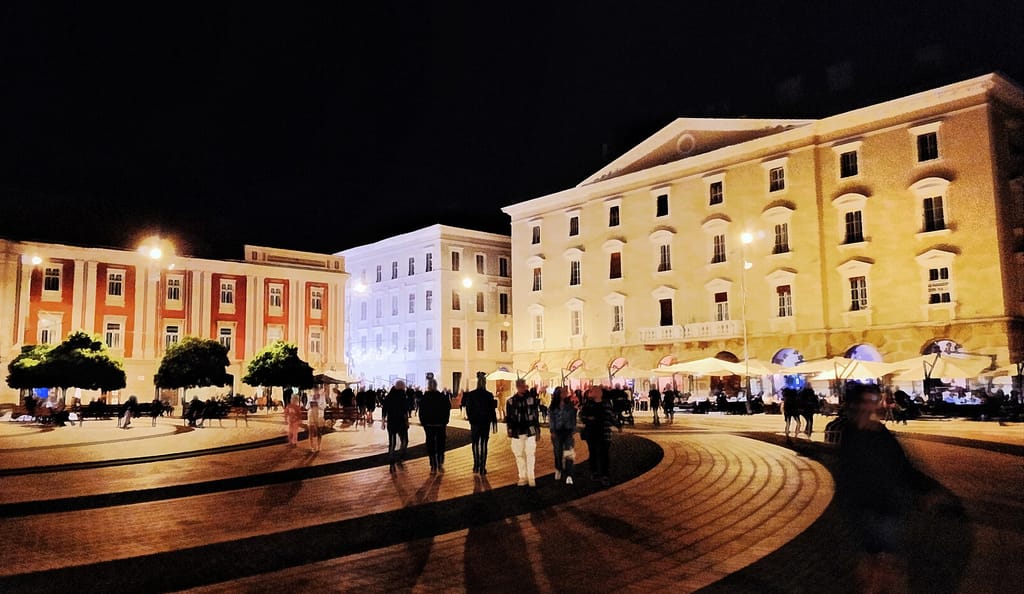
Street lamps and lit façades in central Timișoara after dark.
Timișoara tonight — still lit. Photo: Gugalcrom123 · CC BY 4.0 · Wikimedia Commons · cropped and toned