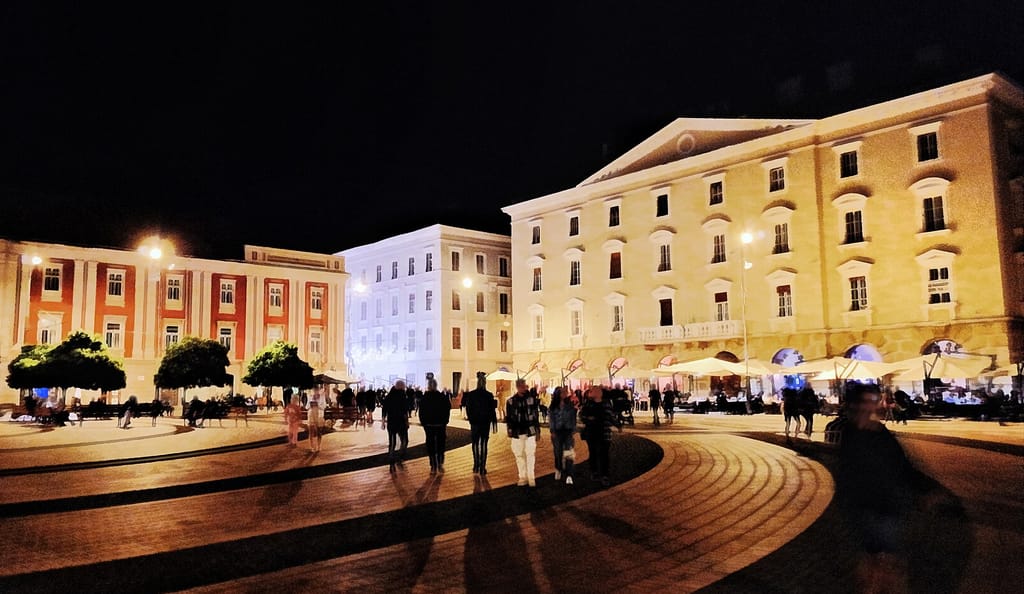
A city refuses to wait
In 1857, gas lighting arrived in Timișoara and two hundred lamps went up along its streets. Twenty-five years later, the Viennese company supplying the gas demanded steeper terms to renew the contract. The city council said no. Instead of renewing, it decided to skip a technology altogether.
In 1882 the city signed with the Anglo-Austrian Brush Electrical Company. Two years of cable-laying later, on the evening of 12 November 1884, a steam plant in the Fabric district pushed current through 59 kilometres of new cable, and 731 carbon-filament lamps came on across every street at once — making Timișoara the first city in continental Europe to light all of its streets with electricity.
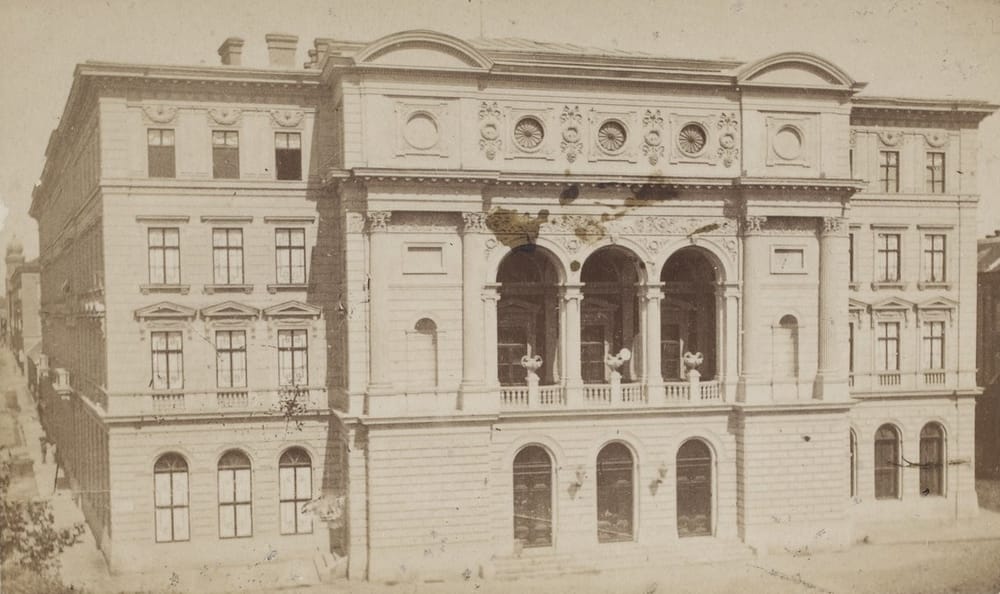
“A whitish-yellow light instantly flooded the streets of the city on the Bega, and coloured the elegantly decorated buildings.”
Vienna and Budapest — the imperial capitals, many times richer — kept their gas. Budapest switched on its first permanent electric street lamps in 1909, a quarter of a century later. Being smaller, and less invested in the old way, turned out to be the advantage.