Lumeni 884

1884 — 731 lamps, one evening · 2026 — AI systems, in weeks

The first city to switch everything on. We build AI software that does the same for companies.

Lumeni 884 embeds senior engineers inside your company to jump from paper, spreadsheets and ageing systems straight to AI-native software in production — in weeks, not years.

On site · Fixed scope, fixed price · 8–12 weeks · You keep the source

Follow the lamps
Plate I
Timișoara, 1857–1884

A city refuses to wait

In 1857, gas lighting arrived in Timișoara and two hundred lamps went up along its streets. Twenty-five years later, the Viennese company supplying the gas demanded steeper terms to renew the contract. The city council said no. Instead of renewing, it decided to skip a technology altogether.

In 1882 the city signed with the Anglo-Austrian Brush Electrical Company. Two years of cable-laying later, on the evening of 12 November 1884, a steam plant in the Fabric district pushed current through 59 kilometres of new cable, and 731 carbon-filament lamps came on across every street at once — making Timișoara the first city in continental Europe to light all of its streets with electricity.
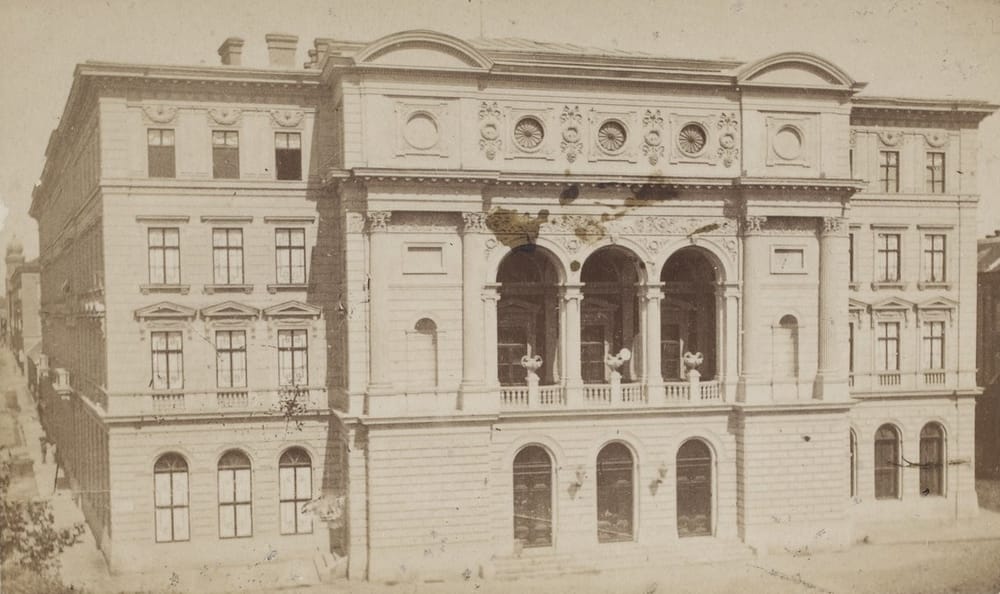
The Franz Josef Theater in Timișoara, photographed around 1880, four years before the city switched on all 731 of its street lamps.
The Franz Josef Theater, photographed around 1880 — four years before the switch. Photo: József Kossak, c. 1880 · Public domain · Bibliothèque nationale de France (Gallica)

“A whitish-yellow light instantly flooded the streets of the city on the Bega, and coloured the elegantly decorated buildings.”

Luminătorul, November 1884

Vienna and Budapest — the imperial capitals, many times richer — kept their gas. Budapest switched on its first permanent electric street lamps in 1909, a quarter of a century later. Being smaller, and less invested in the old way, turned out to be the advantage.
731lamps switched on together
59 kmof cable laid in under two years
10 km²the whole city, lit at once
+25years ahead of Budapest
1957 — Second generation — the machine age

02The argument

Behind is a good place to jump from

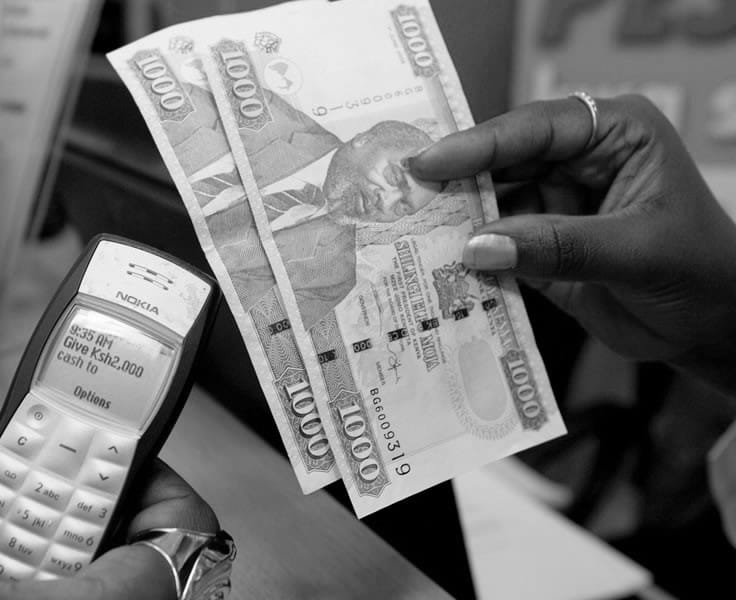
A money transfer being completed on a basic Nokia handset in Nairobi, 2012 — banking delivered without a bank branch.
Nairobi, 2012. A money transfer on a Nokia 1100 — banking that skipped the bank. Photo: Rosenfeld Media · CC BY 2.0 · Wikimedia Commons · cropped and toned

Timișoara could leap because it had little invested in gas. The same mechanism works today. In 2000, about three percent of Africa had a fixed phone line — so the continent skipped copper and went straight to mobile. Kenya’s M-Pesa ran on basic handsets, and formal financial inclusion rose from 27% in 2006 to 85% in 2024. In Senegal, Wave built mobile money in Wolof and French and became Francophone Africa’s first billion-dollar company. None of them modernised the old system. They skipped it.

A company running on paper, spreadsheets and a fifteen-year-old ERP is in the same position. There is no legacy to protect and no migration to fund — and AI has collapsed the cost of building custom production software. The ladder that used to take five to ten years — digitise, buy an ERP, integrate it, then maybe analytics — can now be skipped in favour of building the current generation directly.

Two honest caveats. The leap skips the ladder, not the work: your data still has to be reachable, processes still change, and people still need to adopt what is built. And it does not happen at arm’s length — 95% of enterprise AI pilots show no measurable result, and they fail at deployment, not at the model. That is why we don’t run pilots from our office. We come to yours.

For the first time, being behind on technology is an advantage — if you skip deliberately.

2007 — Third generation — the software age

03Forward-deployed AI engineering

We send engineers, not slide decks

A forward-deployed engineer works inside your company — at your site, on your systems, next to your people — and is measured on one thing: software running in production and being used. Every engagement ends with your team holding the source code, the runbook, and a trained owner. We are designed to leave.

  1. Leapfrog Assessment

    One to two weeks on site. We map how work actually flows — the paper, the spreadsheets, the workarounds — and identify which modernisation stages you can skip. You get a build order with cost and risk for each system. Not a strategy deck.

  2. Embedded Build Residency

    One or two senior engineers at your site for eight to twelve weeks, shipping one complete production system end to end. Fixed scope, fixed price. You keep the running system, its source code, a runbook, and a person on your team trained to own it.

  3. AI-Native System Build

    One workflow, replaced outright: document and invoice extraction, approval routing, plain-language reporting over your operational data, customer intake in five languages. It integrates with what you already run — explicitly not a big-bang migration.

  4. Pilot-to-Production Rescue

    You have a stalled AI pilot or a vendor proof-of-concept. We make it real: data plumbing, evaluation, workflow integration, access control, and adoption by the people who actually do the job.

Invoice No. 0417
FieldValueConfidenceCheck
Net 12 480,00 0,99 verified
VAT 2 371,20 0,98 verified
Total (printed) 14 815,20 0,71 —
Total (calculated) 14 851,20 — does not match
Total mismatch → routed to review
Payment held until a person confirms.
2 fields verified · 1 sent to a person
The invoice reader: net, VAT and total read from the scan — and the total that does not add up routed to a person, not silently accepted. Illustration — not client data

Terms of engagement

On site
At your site, on your systems, next to your people.
1–2 weeks
Leapfrog Assessment: a build order with cost and risk per system.
8–12 weeks
Embedded Build Residency: one complete production system, end to end.
Fixed scope, fixed price
Agreed before we start. No big-bang migration.
You keep it all
The running system, its source code, a runbook, and a trained owner.
2026 — Fourth generation — the intelligence age

04The method

How the lights go on

01

Survey

The first week is spent doing the job beside your staff. The workflow in people’s heads is never the workflow in the manual — we build from the real one.

02

Wire

We build in place, on your systems and your data. The first working software reaches production in weeks, integrated with what you already have.

03

Illuminate

The system goes live with the people who will use it. Adoption is part of the engagement, not an afterthought — we are measured on usage, not on delivery.

04

Hand over the switch

Before we leave, someone on your team can run, fix and extend the system. You keep the source code, the runbook, and the owner. Then we leave.

The method as a circuit: from paper and spreadsheets, through one system built on site, to a switch your team holds. Illustration — not client data

Next step

Book the assessment

Headquartered in Timișoara, working across Europe and West Africa. Tell us what your company runs on today — paper, Excel, an aging ERP, all three. We will tell you honestly whether a leap is available, and what it would cost.

We answer in Romanian, German, English, French and Wolof.

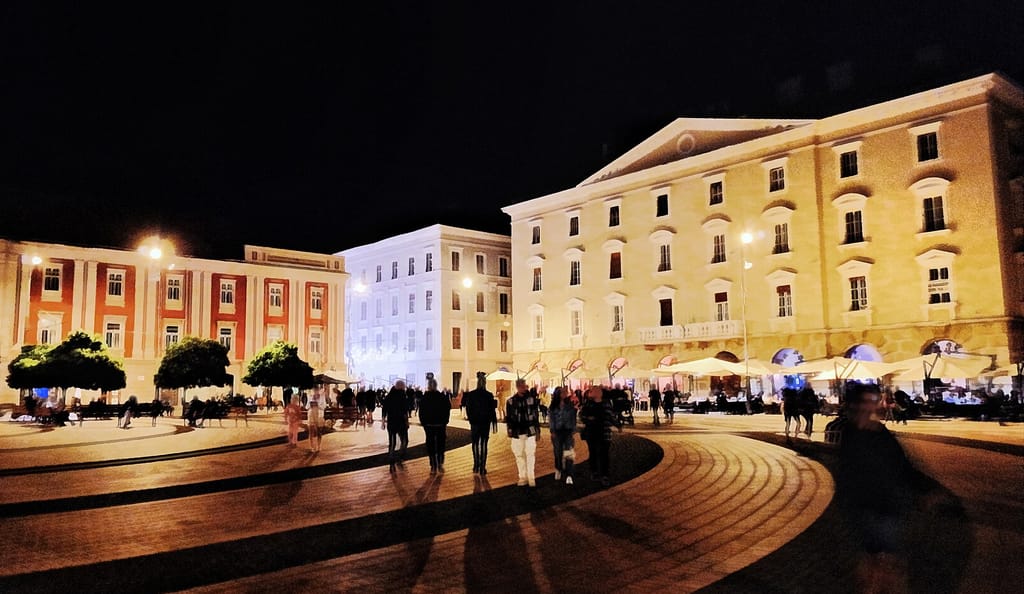
Street lamps and lit façades in central Timișoara after dark.
Timișoara tonight — still lit. Photo: Gugalcrom123 · CC BY 4.0 · Wikimedia Commons · cropped and toned

Timișoara, Romania